

You’ve bought the lot, picked a builder, and maybe even settled on a floor plan. The next step is turning a patch of brush and saplings into ground your builder can actually work on. For many landowners around Rochester, the smartest time to get that done is now, in the months before the building season kicks off.
Land clearing before construction is the first step in any new build, and doing it over the winter means your site can be cleared and shaped, ready when your builder is ready in spring. This guide walks through what clearing actually involves, how the work fits into a winter-to-spring timeline, and how to get your property ready for the crew.
What Does Land Clearing Before Construction Include?
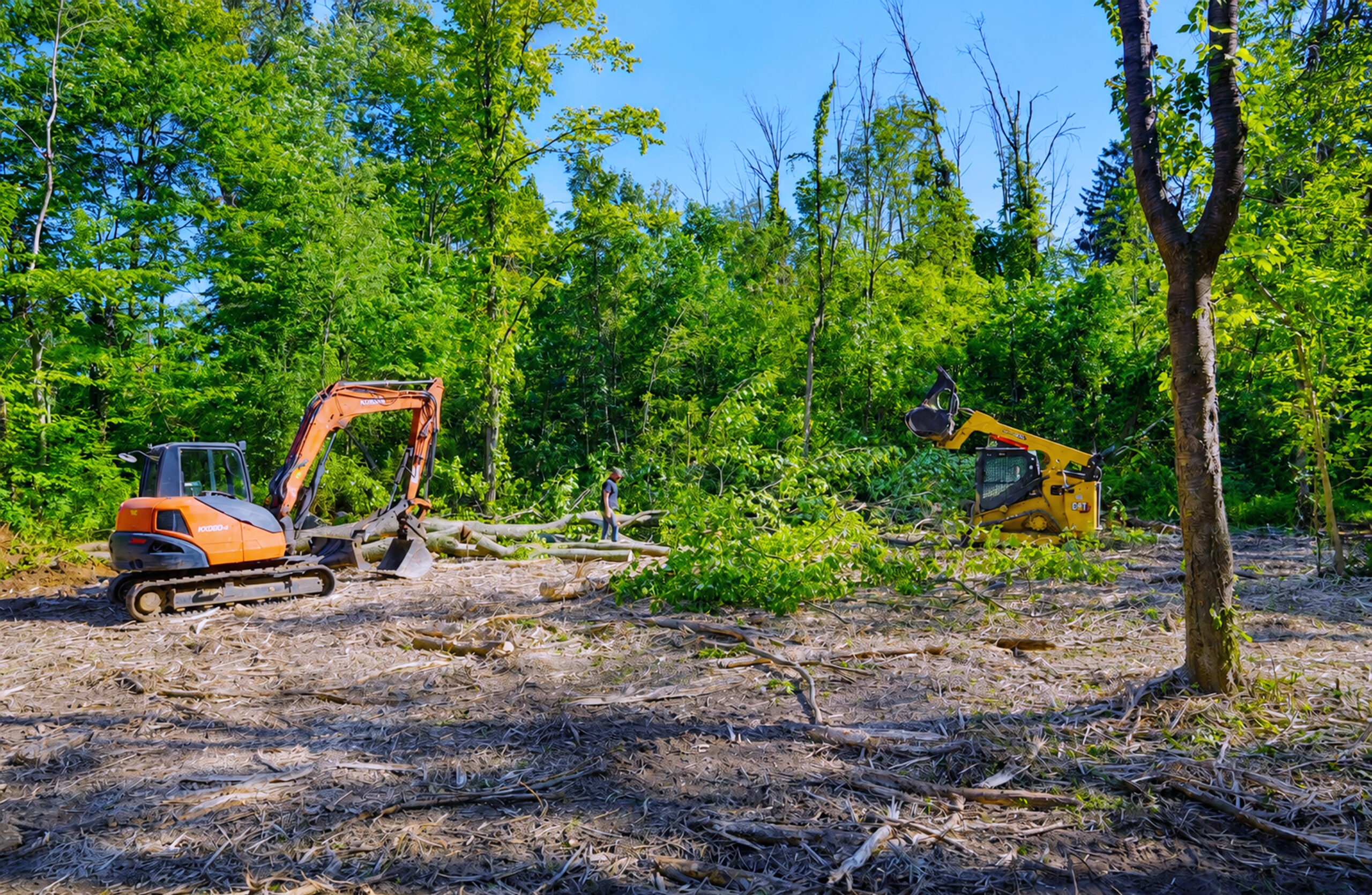
Land clearing before construction removes trees, brush, saplings, vines, undergrowth, and surface debris from the areas where your home, garage, driveway, and yard will be located. It’s the first step in the build process, and it sets up everything that follows, from site prep and grading to drainage and excavation.
Not every lot needs the same approach. A field with light brush along the edges is a very different job from a wooded parcel full of young trees. Before any equipment shows up, we look at the vegetation, the terrain, the access points, and what you plan to build, then put together a clearing plan that fits. On some properties, that means traditional clearing; on others, it’s paired with forestry mulching, so the cleared material is ground up and left on site.
From Overgrown Lot to Build-Ready Site: The Steps
Getting from an overgrown lot to a site your builder can work on usually takes five steps. Here’s how a typical project runs:
- Property review. We walk the land with you and assess the vegetation, terrain, access, and the planned locations of the house and driveway.
- Clearing plan. We decide what comes out, what stays, and whether mulching, brush removal, or access clearing makes the most sense.
- Land clearing. Brush, small trees, and undergrowth are cleared from the building area, driveway path, and any space you want opened up.
- Site cleanup. We check access, usability, and finish quality so nothing is left in the way.
- Site preparation. The ground is shaped with rough grading, unsuitable material is removed, and water flow is planned so the site is ready for gravel, a foundation crew, or final grade.
Because the same team handles both clearing and site prep, there’s no gap between steps three and five while you wait for a second contractor. The site moves straight from cleared to shaped.
A Winter-to-Spring Timeline for Your Rochester Build
Starting the conversation in late fall or early winter gives you the most room to clear the land before construction and still break ground on schedule in spring. Every property and every winter is a little different, but here’s how the season often lines up:
| When | What Happens | Where You Stand |
|---|---|---|
| November to December | Property review, clearing plan, and estimate | Your scope and schedule are set |
| December to February | Land clearing on firm or frozen ground | Building area and driveway path are opened up |
| March to April | Site prep and rough grading as conditions allow | Pad area is shaped, and water flow is planned |
| April to May | Hand-off to your builder or foundation crew | Your site is ready for spring construction |
Winter works well for the clearing phase for a couple of reasons. Once the ground firms up, equipment can reach areas that would be soft and muddy after the spring thaw. With the leaves down, it’s also much easier to see the lay of the land and mark exactly where the house, driveway, and septic area are supposed to go. The grading and shaping steps then follow as the ground allows, which is why we time that part of the job around the weather instead of forcing it.
How to Get Your Lot Ready for Clearing
A little preparation on your end makes the estimate more accurate, and the work goes faster. Before you call, try to have these details handy:
- The approximate size of the area you want cleared
- The type of growth, such as light brush, saplings, or a stand of larger trees
- What you’re building and roughly where it will sit
- How equipment can get onto the property
- Any other work you’ll need, like a driveway, drainage, or a pond
It also helps to share your builder’s site plan if you have one. Knowing the footprint of the house, the garage, and the driveway lets us clear exactly what’s needed and leave the trees you want to keep, whether that’s a shade tree in the backyard or a wooded buffer along the road.
Ready to Break Ground on Schedule This Spring?
Imagine your builder pulling onto your lot in April and finding the land already cleared, the pad area shaped, and a clear path for trucks and equipment. Your schedule stays on track, the trees you wanted are still standing, and construction can start the day the crew arrives.
Excavation Services by Justin Koschara makes that happen. We walk your property, develop a clearing plan around your site plan, handle land clearing over the winter, and follow up with site preparation so the ground is ready for your builder, whether you’re building in Henrietta, Pittsford, or out near Geneseo.
Call (585) 549-3663 or contact us on our website to schedule a free estimate.
FAQ Section
How much does land clearing cost for a building lot in Rochester?
Cost depends on the size of the area, how dense the growth is, the size of the trees, the terrain, and how easy the site is for equipment to reach. Clearing only the house footprint and driveway costs less than opening up the entire parcel. The most reliable number comes from a free on-site estimate based on your actual lot and site plan.
Should I clear the whole lot or just the building area?
Most people clear the footprint of the house and garage, the driveway path, and enough working space around them for construction equipment. Leaving mature trees at the edges and back of the lot saves money and keeps the property’s natural look. You can always open up more space later for a yard, garden, or trails.
Do I need my builder’s plans before I clear the land?
It’s not required, but it helps. Even a rough sketch showing where the house, garage, and driveway will go lets us clear the right areas the first time. If you’re still finalizing plans, we can clear for access and a general building area, then fine-tune once the layout is set.
What happens to the trees and brush after clearing?
That depends on the plan for your property. On many lots, the cleared material is ground up with forestry mulching and left on site, where it protects the soil from erosion. In the building area itself, the ground is then shaped during site prep so the mulch and loose material don’t get in the way of construction.